
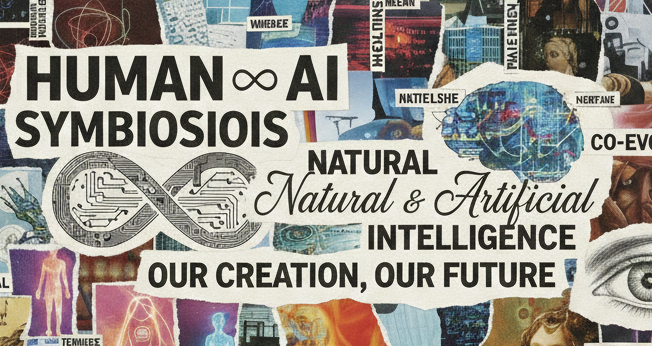
AI Is Not Magic, It Predicts Like Your Mind
A simple way for senior professionals to see through the “black box” story
Common perception of AI as “magic”
You are in a project review meeting in Kuala Lumpur. A younger colleague suggests, “We can use AI to speed this up. Some of these tools are really magic.” People laugh. Someone says, “Just let the AI do everything.”
But you are responsible for results, risk and people and you have survived many “magic solutions” before. AI feels different: powerful, invisible, slightly dangerous. You are not afraid, but you feel just outside the conversation.
Yet your day is already full of AI: Waze routes, Gmail’s “Thanks, noted”, YouTube recommendations, Shopee suggestions. None of that feels like magic. It is just… useful, sometimes wrong. So why does “AI” in a meeting suddenly feel mystical?
Often, it’s because we do not have a simple explanation. Our brain fills the gap with labels like “magic” or “too complicated for me”. This article replaces that label with a more practical one: prediction.
What is changing
Modern AI is showing up not just inside apps, but directly in strategic decisions: customer churn models, hiring tools, risk scoring, content drafting. When we see it as magic, we either blindly accept or completely reject it.
For senior professionals, that is dangerous. You risk being pushed to the side of important conversations, even though you understand customers, regulators, culture and real-world consequences far better than any model.
To stay in the driver’s seat, you need a mental model that fits with how you already think: AI as a prediction tool.
How Gen AI actually works in this article’s context
Most modern AI, including tools like ChatGPT, works by learning patterns from huge amounts of past data and predicting what comes next. Like a child growing up with Bahasa Malaysia and English, the model sees countless sentences, images or clicks. Over time it “learns” which pieces tend to go together and predicts the next word, pixel or action.
Your apps already do this: * Gmail predicts likely replies to an email. * YouTube predicts videos you might watch. * Waze predicts which route will get you there faster.
Your own mind works in a similar way. You enter a meeting already predicting who will talk first or resist a proposal. You read a client email and “know” how they might react. Both AI and your brain: * Predict based on patterns. * Make mistakes. * Adjust when reality proves them wrong.
Once you see AI as a fallible prediction system, not a spirit in a box, it becomes something you can question, test and design around.
What this means for an experienced professional in Malaysia
Two mental models lead to very different roles for you: * “AI is magic” – You feel you must fully trust or fully reject it. You hesitate to ask basic questions about data, accuracy or bias. You may stay quiet when younger colleagues speak confidently. “AI is a prediction tool” and You ask, “What exactly is it predicting? From which data? How often is it wrong?” You treat it like any forecast or financial model.
In this second model, your strengths become central: You already judge projections and risk. You already challenge numbers that “don’t smell right”. You already balance speed with control, especially under Malaysian regulatory, cultural and client constraints.
AI does not shrink your value. It increases the need for your judgement about which predictions to trust, adapt or reject.
How to start experimenting safely and intelligently
You do not need to code. You need better questions. Three simple practices:
- Change your language. For one week, describe AI outputs as predictions: “This tool predicts which customers may churn,” instead of “This AI decides who is risky.”
- Ask one prediction question in your next meeting. When AI is proposed, ask: “What is it predicting, and how will we check if those predictions match reality?”
- Run one low-risk experiment. Use an AI tool to draft an internal email, summarize notes or propose options. Compare its prediction with your own view. Treat it like a junior analyst: useful, but needing supervision. Over time, AI stops feeling like a mysterious force and becomes what it truly is: another prediction system under your leadership.
You have been living with predictions your whole career. AI simply adds more of them for you to question, refine and turn into better decisions.
“So now we know that AI can inform, but should not be allowed to decide on its own.” And what does that look like in practice?
I created this interactive Workflow Mapper to accompany the article. It allows you to input your actual weekly tasks and see exactly how to design the partnership between you and the AI, whether it’s an AI-led draft, a human-led decision, or a strictly human-only interaction.
Workflow Symbiosis Mapper
Don’t just “use AI”. Design the partnership. Map your tasks to see where you should lead and where AI should lift.
Map your first task above to see the breakdown.
0 Comments