Generative AI for Malaysia Series: What Your Data Patterns Push Back at You
Why “professional-sounding” AI can still be culturally off, biased, or quietly misleading and how to read it with senior judgment
Why does “neutral” AI sometimes sound strangely human and slightly wrong?
Because the moment you use it in real work, you start hearing the fingerprints of whoever wrote the most text in its world.
An HR head asks for performance review phrases and gets crisp, imported-sounding feedback, heavy on “assertiveness” and direct critique. A marketing team requests slogans and receives clever English lines echoing foreign cultural references that fall flat (or worse, turn awkward) when localised. A senior leader prompts for “ideal leadership traits” and notices gendered language patterns that don’t match the organisation’s values.
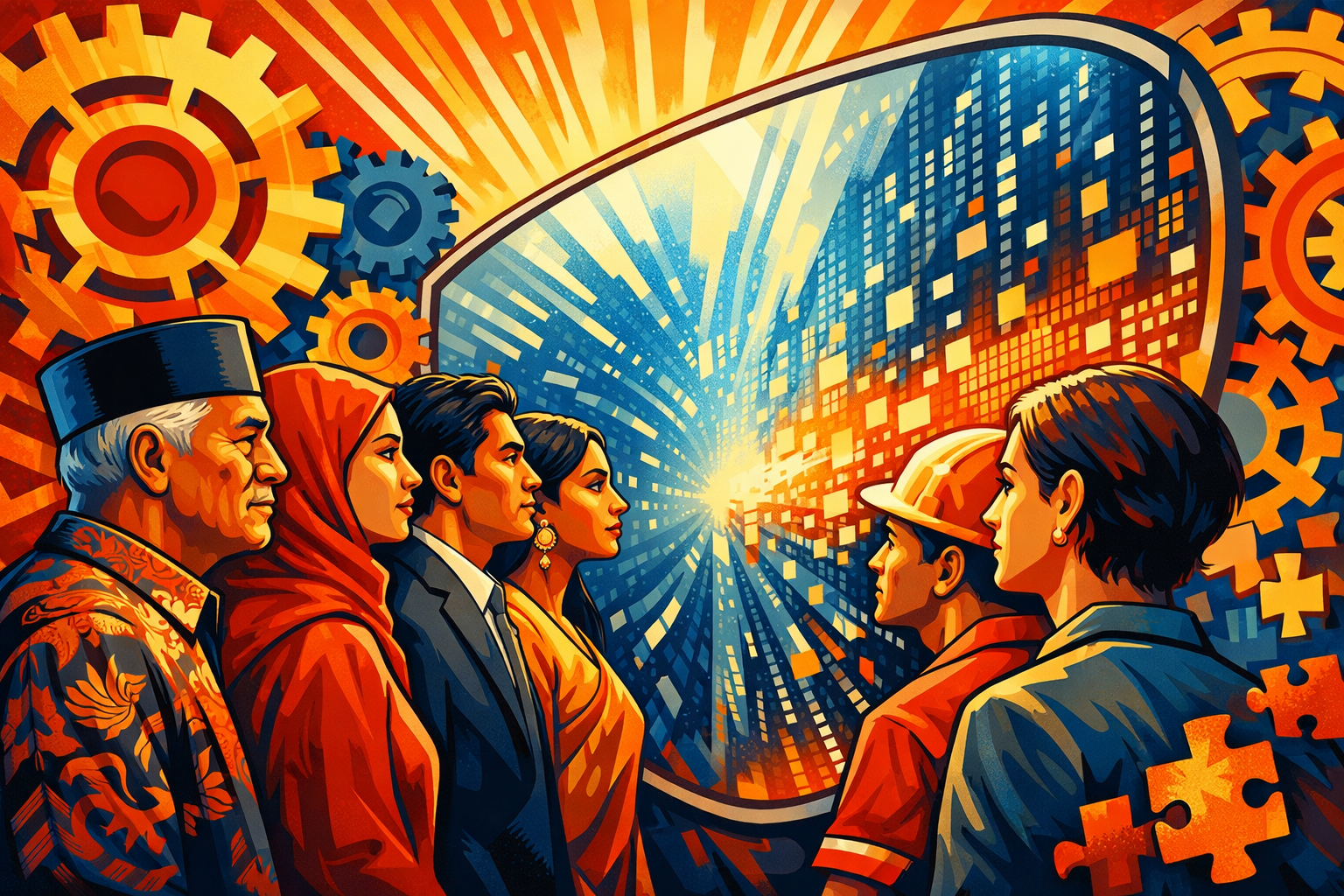
That’s the key shift: generative AI is not a referee handing down objective verdicts. It is a mirror reflecting aggregated patterns from its training data, including strengths, gaps, and biases. If you treat it like a mirror, you stop asking, “Is this correct?” and start asking, “What is this reflecting, and do we want that in our organisation?”
If it’s “just patterns,” where do bias and cultural misfit come from?
Because “common” is not the same as “neutral.” Some regions and languages produce far more written material than others. Certain corporate cultures dominate the global text footprint. Historical stereotypes sit inside everyday writing, how we describe leaders, support staff, gender roles, seniority, and “good communication.”
So when the model generates HR phrasing that sounds Western, or marketing lines packed with foreign idioms, it’s not being malicious. It’s reflecting a skewed training diet. And when it outputs subtly gendered examples, it may be exposing how leadership has often been written about and at scale.
What does generative AI actually “see” when it writes?
In broad terms, it learns from very large collections of text such as public websites, articles, books, reports, code, manuals, and sometimes licensed datasets. It doesn’t “know the truth” the way a human professional does. It learns which words and ideas commonly appear together, and it generates what is statistically likely to come next.
That’s why it can sound fluent and confident even when it’s mismatched, incomplete, or occasionally just wrong. The system is optimised for plausible continuation, not fairness, local fit, or your organisational context.
How should you use AI output responsibly, without losing speed?
Use it as a fast draft engine—but keep your senior “context filter” switched on. Try a quick mirror checklist:
-
Whose world is this reflecting? (Western corporate? Another industry? A different hierarchy?)
-
Who is missing or stereotyped? (frontliners, support roles, certain genders/ethnicities)
-
What assumptions are baked in? (“speaking up” as universal good, flat hierarchy, individual-first norms)
Then force a localisation pass. Draft with AI then review for Malaysian and organisational fit and optionally ask AI to revise with explicit guidance (tone, audience, inclusivity).
And when something feels uncomfortable, don’t just delete it but use it as a signal to check both the model’s patterns and your own documents.
What’s one simple exercise to build “mirror awareness” in your team?
Run a Bias Mirror Stepper in a short session:
- Start with a neutral prompt (e.g., “Describe a high-performing employee”).
- Read the output slowly: who appears, how they’re described, what “normal” looks like.
- Annotate: cultural tone, stereotypes, missing groups, hidden hierarchy assumptions.
- Re-prompt with constraints (Malaysian context, balanced representation, formal tone).
- Compare versions and ask: where are we currently assuming AI is neutral, and where do we need review habits or guidelines?
When AI reflects something you don’t like, the leadership question isn’t “Can the tool be smarter?”, it’s “What do we want to standardise in our own language, culture, and expectations before we automate it?”
AI Mirror Checker: Localise before you reuse
Paste an AI draft, then scan for cultural and organisational misfit markers. Generate a revision prompt that forces Malaysian context, inclusivity, and British English.
Mirror Checklist
Tick what you notice, the prompt builder will adapt.
0 Comments